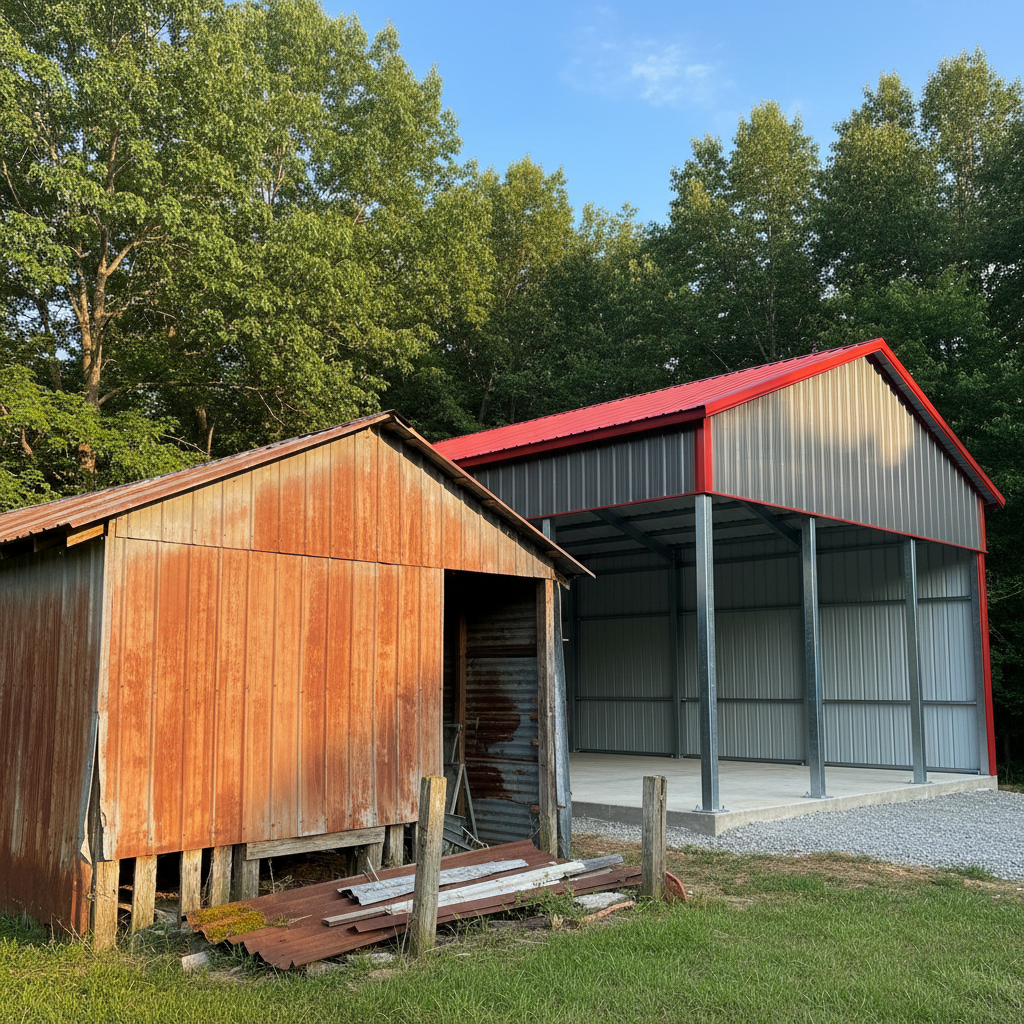
Alright, let's talk pole barns for a minute. Maybe you're looking to add some serious utility to your property – a workshop, storage for your boat, or even a covered spot for your tractor. Good call, by the way. A metal pole barn is a smart investment, especially around here where we get all sorts of weather. But when you start digging into it, you'll quickly find there are two main ways folks build these things: the classic post-frame method and the newer all-steel frame approach. So, which one's right for your place in Knoxville?
What's the Difference?
At its core, the difference really comes down to the building's skeleton. A traditional post-frame structure, often what people picture when they say 'pole barn,' uses large wooden posts. These posts go directly into the ground or sit on concrete piers, and they carry the roof and wall loads. Then you've got wood purlins and girts spanning between those posts, and finally, you attach your metal siding and roofing.
An all-steel frame building, on the other hand, is exactly what it sounds like. It's built more like a mini commercial building, you know? You start with a concrete foundation, then bolt together a framework of steel columns and beams. No wood posts in the ground at all. The metal panels attach right to that steel skeleton.
Cost: What You Pay Upfront
Let's be real, cost is usually the first thing on everyone's mind. Generally speaking, a post-frame building will have a lower upfront cost. Wood is typically cheaper than structural steel, and sometimes the construction process can be a bit quicker, which means fewer labor hours. If you're on a tighter budget and just need a basic, functional structure, post-frame often wins here.
However, that's not always the whole story. The price difference isn't as massive as it used to be, especially with lumber prices bouncing around. Plus, don't forget about the foundation. Post-frame can sometimes get away with simpler footings, but an all-steel frame usually needs a more substantial concrete slab or perimeter foundation, and that definitely adds to the initial cost.
Durability & Longevity: Built to Last
This is where the all-steel frame really starts to shine, especially in a place like Knoxville. We get our share of heavy snow, strong winds, and that good old Tennessee humidity. Wood, even treated wood, can rot, warp, or become a snack for pests like termites. I've seen plenty of older post-frame buildings around East Tennessee where the posts have started to deteriorate at ground level, especially in areas with poor drainage or heavy clay soil.
An all-steel frame? It won't rot, termites don't care for it, and it's fire-resistant. It's engineered to withstand much higher wind and snow loads. You're getting a structure that's going to stand strong for decades with minimal fuss. For Apex Metal Buildings, this is why we often recommend all-steel for folks who want maximum peace of mind.
Maintenance: Set It and Forget It?
Again, all-steel takes the cake here. With a post-frame, you'll want to regularly inspect those posts for signs of rot or insect damage, especially where they meet the ground. You might need to re-seal or repaint wood components over time. And you'll definitely want to keep an eye on your gutters and drainage to prevent water from pooling around the posts.
With an all-steel frame, maintenance is pretty much limited to the exterior panels – keeping them clean, maybe touching up any scratches if they happen. The structural integrity won't be compromised by moisture or bugs. It's just a much lower headache option long-term.
Appearance & Customization: Making It Yours
Both types of buildings can look great. You can get metal siding and roofing in a huge range of colors and profiles for either one. However, all-steel frames generally offer more flexibility for clear-span interiors. Because the steel beams can span greater distances without interior supports, you get a wide-open space inside. This is fantastic if you're planning a large workshop, a garage for multiple vehicles, or a space that might need to be reconfigured later.
Post-frame buildings often have more interior posts, which can limit layout options. That said, post-frame can sometimes be easier to finish out on the interior with conventional drywall or other materials if you're going for a more residential look, though all-steel frames are perfectly capable of that too.
My Recommendation for Knoxville Homeowners
Look, if your budget is extremely tight and you just need a basic, functional structure for light storage, a well-built post-frame can serve you fine. Just be aware of the long-term maintenance and potential vulnerabilities to our local conditions.
But for most homeowners in Knoxville, especially if you're looking for a structure that will truly last, require minimal maintenance, and give you maximum flexibility for future use, I strongly recommend an all-steel frame building. The slightly higher initial investment pays off big time in durability, peace of mind, and longevity. You won't have to worry about those posts rotting out in our humid summers or dealing with termites. It's a more robust, permanent solution that's built to handle whatever East Tennessee throws at it for decades to come.